Thursday, October 17, 2013

Writing Difficult Topics by Claire Rogerson

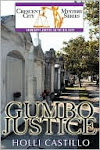
Today's guest blog is by writer Claire Rogerson and includes a topic near and dear to the heart of my protagonist Ryan Murphy in Gumbo Justice and Jambalaya Justice. When the mystery series begins, Ryan has begun drinking somewhat excessively to cope with some issues from her past.  Read what Claire has to say about writing about this and other sensitive topics.

Late Nights, Not After School: Writing Difficult Topics
There are some topics which have to be handled with respect - not necessarily the kind of respect you’d give royalty, but the kind you give to volatile chemicals. One wrong move and you can explode the hard work you’ve put into the rest of your novel, leaving the reader feeling cheated, used, and thoroughly disengaged from the story. Call them the after-school special topics: addiction, rape, abuse, and mental illness. They’re the big guns a lot of beginning (or just subpar) writers reach for when they want to create drama without doing the work, using them as a cheap shortcut to sympathetic characters, “gritty” plots, and a general sense of edginess. Not only does this disrespect the people who actually live through these things, they’re easily sniffed out by disappointed readers. Of course, there are ways of avoiding using these topics lazily; all it takes is knowledge, consideration, and understand the story you’re trying to tell. 

Do The Research
Before you start writing, start reading. Although almost all stories require - and definitely benefit from - research, we can extrapolate from our own lives for most emotional states. Yet with so many cliches, incorrect tropes, and “everybody knows” ideas around these topics, it’s particularly important to let go of what you think you know and start fresh. You can do everything else right, but your story will feel hollow unless you start with facts and lived experiences. It’s fine to have a character with OCD, but there’s a world of difference between one who just washes their hands a lot and one who struggles realistically with intrusive thoughts.

Read everything: websites, books, and forums where people who live with these things gather to talk. (For the latter, it can be helpful to introduce yourself; not only is it polite, but you might find people you can ask specific questions.) As a way of ridding yourself of misconceptions, one trick is to write down everything you believe about the topic and then making notes on each belief as you learn more - some of them might be true, but even those will likely have much more to them.

Where Are They, And Why?
One of the rookie mistakes writers make when writing these topics is to use them as high drama, placing their character squarely inside the most intense moments. While this is a legitimate story, it can also be a major distraction (and a source of cringe-worthy melodrama) if it’s not applicable to the actual plot. Instead, it’s possible to acknowledge these topics as part of life and examine the subtleties instead of the shouts.

Take addiction, for example. It’s possible to have believable, appropriate characters who are deep within their addiction, but it’s also effective to have their addiction be only one part of their complex whole. They might have gone through alcohol addiction recovery a decade earlier, or they might be on the cusp of addiction - those months or years when it’s anyone’s guess whether it will one day be something to worry about. Particularly for the latter approach, sometimes it’s something you know (that in ten years they’ll be regular AA attendees, for example) that doesn’t need to even be mentioned; it informs the way they are now, but might not ever be said outright. Considering your character’s addiction - or mental illness, or abuse - in the context of their life will bring a new sense of truth and solidity to its inclusion, allowing your words to ring true even to people who have experienced what you’re writing.

How Does It Fit?
Finally, it’s critical to examine why you’re including one of these topics. Is it because it makes sense in the context of the plot, does it add to characterization and deepen your story, or is it being used for shock value or another reason? There’s some genres where shock-value inclusion is valid, but for most stories it will have the opposite of the intended effect: instead of deepening the reader’s interest, they’ll see it for what it is and roll their eyes, pulling them out of your story. Not really the reaction you’re looking for, is it? By getting a handle on why you’re including one of these topics as background, a plot point, or anything else, you’ll be closer to recognizing the best way to write it.

These topics shouldn’t be taboo - in fact, it’s the much-maligned after-school specials which helped to bring them into mainstream conversation. Yet we’re a lot way from the days when they automatically brought an exploitive thrill simply by inclusion, and they should be treated with dignity and healthy respect. With those in place, you’re well on your way to writing something with real bite.

ABOUT THE AUTHOR:

Claire Rogerson is a freelance writer, who made a career change after giving birth to her first daughter. She now enjoys the perfect, if busy, combination of researching her passion for helping people overcome addictions with writing and at the same time looking after her family. When not doing all of that, she's an avid volleyball fan and gardener. 


Tuesday, October 15, 2013

Beryl Reichenberg: Twelve Question Tuesday


Today I welcome Beryl Reichenberg to my first Twelve Question Tuesday interview. 

1.  Please tell me the three most important things people should know about you.

I’m an artist, author and illustrator of children’s books, and happy.
   
2.  Are you a dog person or a cat person?
I am both; I’ve had cats and dogs. Love them both. I’d like to have one of each now, but that is not possible.

3.  Tea or coffee?

I used to drink coffee, but now I drink tea. I dislike Starbuck’s coffee; it’s too strong.

4.  Boxers, briefs, boxer-briefs, or commando?
All are fine.


5.  What was the first thing you ever wrote?
I’m sure I wrote stories in school, but the first serious piece I ever wrote was a sketch about my experience in England during the 60’s when I lived there for a year about my first experience shopping for food, English style.

6.  When did you finally decide to call yourself a writer?

 After Billie signed me up to publish my first book, Ants on a Log.


7.  Which of your works are you most proud to have written? 
Probably that first OTP book, Ants on a Log, because it was an actual story about my son and his dislike of vegetables.


8.  What is the scariest thing that has ever happened to you?
Having my finger mended when it was caught in a car door when I was about four years old.

9.  How did you end up getting published? 
I self-published a number of books with Blurb.com. I met Billie at a writer’s festival in San Luis Obispo several years ago, just about the time she was thinking of publishing children’s books. She signed me up, and I now have five books with OTP.

10.  Would you be food or fighter if the zombie apocalypse were to happen? 
Oh dear, that’s a hard one. I think “food”, although one never knows when confronted by such prospects.

11.  What is the most daring thing you have ever done? 
Becoming an author.

12.  Would you rather be rich or famous--and you could only have one-- and why?
 I’d rather be famous! Being rich seems hollow at my age. Having enough money to live on for the rest of my days is sufficient. I’d rather do something meaningful with my life.

BERYL's LINKS:

Links:  website: www.berylreichenberg.com

My books are available from Oak Tree Press (www.oaktreebooks.com), Amazon and a number of bookstores, children's stores, toy stores, and museums in California (view my webs site for this list).


Saturday, October 5, 2013

Oak Tree Press

As usual, the writers at my publisher, Oak Tree Press, are busy.  With such a diverse group of writers and genres, it's no surprise that their promotional events and activities are just as diverse.  Here is a link to the Friday Roundup, which lists what some of the writers are doing for promotion just this week. http://otpblog.blogspot.com/

Most people have no idea how much work a writer needs to do after the book is published.  Yes, writing a book takes a lot of time and hard work.  Whether the writer is a panster or plotter, nobody can just sit at a computer and have a novel or short story mysteriously appear.  Not even a mystery.

Long hours, tears, cursing, coffee, maybe whiskey or tequila, depending upon the writer, may go into the first step of the writing process.  That first step is getting the thing on paper.  Despite the agony that may sometimes be involved--the birthing process is never easy--writers enjoy it.  This is what we love to do. It isn't work, no matter how difficult it may become. 

Can't figure out the next step in the plot? Realize the ending lacks focus? The beginning doesn't have a hook? Another character is needed? Doesn't matter. Writers work through it, because we love writing too much to give up.  Would a mom give up on weaning her child from a bottle just because it's hard? Or potty-training? Of course not.  If that were the case, the world would be full of adults drinking beer from baby bottles while wearing adult diapers.

Then more hours, but maybe a few less tears and cursing, go into the editing process.  If the writer already has a publisher, the next step, waiting for the manuscript to be returned for edits, can be a painful couple of weeks or months.  If the writer doesn't have a publisher, the wait for answers to queries can be a painful couple of months or years, or in some cases, a wait for something that never happens.  Not every publisher bothers to respond.

A good publisher will also ask for a marketing plan around this time.  That's the business end of writing, the part most of us don't enjoy.  I'm a FICTION writer.  Marketing is NON-FICTION, something I have no interest in writing.  Too bad for me.  The marketing plan is the first step of promotion.

This tells the publisher how and to whom the writer plans to sell the book.  The publisher wants to know that the writer has a target audience, knows who that target audience is, and how the writer plans to reach that target audience. 

This is the point where the work truly begins.

Sunday, September 22, 2013

Endings

ENDINGS

In the last few weeks, I’ve read several novels that were thoroughly enjoyable– until I got to the endings.

The novels were well-written.  Each one started off with a bang, did a great job of introducing the characters, had an appropriate amount of back story and description, and flowed well.  The plots were compelling, the characters drew me in, and I was all set for a great, satisfying ending.

And then the unthinkable happened.  The endings were poorly constructed.  In the first of four such novels, the ending itself was adequate, but the story just, well, ended.  There was no closure.  The protagonist solved the mystery in one sentence, explained what he would do with the information as to who the killer was in a short paragraph, and that was it.  Although the mystery was solved, the ending fell completely flat.

In the other three works, the endings weren’t even adequate.  The mystery was solved, but I had a “so what” feeling after I finished.

When a mystery is solved, many novels have that Scooby-Doo moment where the guilty party has to explain a few things, maybe why he did it or how he did it.  Sometimes, it’s unavoidable, and if done well, it doesn’t stick out.  It gives the reader that a-ha moment, where everything suddenly fits in together– all those clues, all that foreshadowing, remembering back to those few pages where the killer was alone with the protagonist and getting the subtext of the conversation, realizing his words had a completely different meaning. Getting that final chill, what my 11-year-old daughter calls, “the feels.”

When it’s not done well, however, instead of the chills, that moment of explanation seems like a lazy way of passing the information on to the reader.  One of the books I read did not do this well, and it felt like an info dump.  I think it was most surprising because the rest of the book was well-written.  The villain went on for pages upon pages explaining the why, the how, the when, and by then I didn’t care any more. I just wanted the book to end.

The next of the disappointing, inadequate endings just didn’t make sense.  I completely didn’t believe the person whodunnit actually dunnit.  It was one of those came-out-of-left-field killers,  with little in the novel to hint to his identity and even less to let me believe he could do it.  The writer offered no clue that this individual could possibly have had the skills necessary to pull off the murder, and I did not buy him as the killer.

In the last of these books with poorly written endings, the exact opposite occurred--the killer was exactly who everyone thought the killer was going to be, including the protagonist.  The book was compelling up until then, because I just knew at the last minute, the killer was going to be revealed as someone else.  Only he wasn’t.   There were other suspects, but the this one was so obvious and so suspicious I knew one of the less obvious suspects had to be the bad guy.  When he wasn’t, the whole book seemed silly.  It’s not really a mystery if everyone knows who did it.

Which begs the question of whether the books were any good at all.  While that is a totally subjective question, I have to say it’s difficult for me to answer.  Up until the blown endings, I would have given these books 7s or 8s on a 1-10 scale.  After the endings, I had to rethink my enjoyment level.  Is a book still enjoyable if 92 percent of is pretty good, and then the last 8 percent sucks?  Resolutions are so important, especially if the writer wants the reader to read the next book he or she writes.  But on the other hand, up until those last few pages, I had enjoyed the journey.  Is the destination just as important as the trip itself?

I guess the real question is whether I’ll take a chance and buy another book by these writers.  I’m thinking I’ll read the reviews before I do, and if any of my criticisms are repeated by other readers, I’ll probably take a pass.  Life is too short to be disappointed by bad endings.

Saturday, March 2, 2013

SNEAK PEEK SUNDAY- LAGNIAPPE NIGHTS

This week for Sneak Peek Sunday I have posted ten sentences from a work in progress tentatively titled LAGNIAPPE NIGHTS.  It's a mystery novel, but lighter than my Crescent City Mystery Series.  It is still in its infancy, mostly because of time issues, but I do have the whole thing outlined.  Like Gumbo Justice and Jambalaya Justice, it features a female prosecutor, but Josephine Badon is more of a misfit than my other protagonist. At least when the book begins.


    It all started with a black leather thong.  Not mine, and not even a fresh one, if you want to know the God’s honest truth.  So not only was my husband cheating on me, he was cheating on me with a skank. 

    It came to light Tuesday afternoon, while I was at my desk reading through a homicide file.  It wasn't a particularly interesting homicide, but even the boring murders demanded attention.  

    In its favor, the case was pretty standard in the way of New Orleans murders.  Wanna-Be-Drug- Dealer-A shoots Wanna-Be-Drug-Dealer-B sixteen times.  A low level rock head on Dealer B's team by the name of Tyrone “Skinny Man” Smith, who made Biggie Smalls and 50 Cent look like altar boys and was unfortunate enough to be the only witness to the shooting, had changed his story every time I spoke to him. 

    That was part of the reason I didn’t bother to read the police reports until right before trial.  One fact you can bank on is that police reports rarely help the prosecution in murder cases.


For more snippets from other authors, please go to http://sneakpeeksunday.blogspot.com/
and click on the links.


Sunday, February 24, 2013

Sneak Peek Sunday- Chocolate City Justice

As part of Sneek Peak Sunday, I have posted the first ten sentences from Chocolate City Justice, the third in the Crescent City Mystery Series scheduled for release by Oak Tree Press this summer.  The mystery series revolves around a female prosecutor in New Orleans, Ryan Murphy.  The first two novels, Gumbo Justice and Jambalaya Justice occur pre-Katrina, while Chocolate City Justice takes place during the hurricane, as Ryan gets trapped in the city when she misses the window to evacuate.  


The boom-boom of the bass from the tricked-out orange Hummer creeping through the New Orleans Ninth Ward should have served as a warning. The Hummer was jacked up from the tires, with spinning rims and a gold chain vanity frame around the license plate that said just as much about its owner as the music selection did. If a song whose only lyrics repeated kill the po-po two hundred times could be considered music.

An abandoned lot on the corner was set up with a portable turkey deep fryer, a boiling pot of crawfish on a hot plate, and a fold-out card table displaying a hat-box size pink and white birthday cake with a black Disney princess figure on top.

The children jumping in the purple castle-shaped spacewalk in the lot continued to laugh and scream, oblivious, but the adults should have noticed and been on alert as the boom-boom grew louder, the Hummer pausing at the intersection before making the corner.  The forty somewhat people hanging out, peeling crawfish, and drinking liquor out of green bottles and silver cans must have thought they were safe during the day.

Gang members were like vampires–even the Ninth Ward Warriors couldn’t kill in the daylight.

A black woman who could have been anywhere from 20 to 40 called, “Come see here, Tanisha, and show your teeths before we do your cake.”

A girl of six with a head full of braids was instantly at the woman’s side, smiling wide, exposing four missing front teeth.  A split second later, a smaller version of Tanisha edged her way next to the woman and tugged on her arm with an even bigger smile than her sister’s.

The orange Hummer stopped.


For more previews by other authors, visit http://www.sneakpeeksunday.blogspot.com/ and click on the links.


Saturday, February 16, 2013

Jambalaya Justice Excerpt for Sneak Peak Sunday

Below is an excerpt from Jambalaya Justice, the second in the Crescent City Mystery Series, for Sneak Peak Sunday:

Assistant district attorney Ryan Murphy let the jumbled thoughts brew in her mind like the coffee and chicory that once percolated in the battered silver pot on the dead woman’s stove.

She fought the urge to close Cherry’s eyes.  Regardless of whether the cause was biological or chemical, the woman couldn’t see anything now.  She was smiling, though, or so it seemed, dying the way she lived, with a gold-capped grin spread across her ebony face.

Ryan remembered that smile and the way Cherry called everyone baby.  She also remembered Cherry’s help, which had saved Ryan’s ass on more than one occasion.

And now Cherry was dead, her pit-stained tank pushed up to reveal a bloody, makeshift tattoo.

If anything would salve Ryan’s conscience, it was that crude smiley face, cut just above Cherry’s right breast.  The bodies of two other prostitutes had recently been found bearing the same mark, making Cherry’s lifestyle the more likely reason for her untimely death than Ryan’s tenuous connection to her.

Either way, Ryan doubted she would get much sleep tonight.


For more excerpts from other writers on Sneak Peak Sunday, please visit   http://www.sneakpeeksunday.blogspot.com/