Showing posts with label Travis McCabe. Show all posts

Thursday, May 5, 2011

Jambalaya Justice

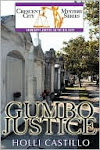
Just as I am finished editing Jambalaya Justice, the second in the Crescent City Mystery Series and follow up to Gumbo Justice, I saw on the news that one of the New Orleans police officers originally convicted in relation to a police-Katrina murder has had his conviction overturned and has been granted a new trial. The feds are reviewing the federal judge's decision to determine if they will re-try him or not.


I have blogged about this particular murder before. There were five officers, some rank, allegedly involved. During the aftermath of Katrina, when the police had set up makeshift district offices, a rookie sharpshooter was accused of shooting a civilian who was attempting to approach the office. Two other officers were accused of taking his body from his brother and another individual who were attempting to save him, and burning it. Another officer was accused of writing and filing a false police report and then lying to federal agents about it, and finally, a rank was accused off intentionally not tying the three separate incidents together and realizing it was a scheme to cover a murder. The sharpshooter was convicted, as was one of the officers who burned the body. The officer accused of the cover up for filing a false report was the third convicted, and the one whose conviction has now been overturned.


The last guy happens to be a friend of mine. His wife and I were assistant district attorneys together in the late 1990's. He was a police officer even then, which is how they met, and he actually arrested my brother-in-law once for possession of marijuana. Travis, the officer, always seemed to me to be a straight shooter who played by the rules. He certainly didn't offer any leeway for my brother-in-law after finding out who he was.


When Travis was convicted, I was upset. I could only imagine what his wife was going through, and while I could picture Travis following an order someone gave him, I couldn't imagine him intentionally doing something on his own like hiding the truth about a murder. But I wasn't there, and Katrina was an unprecedented event and I can't swear as to how anybody will act under those type of conditions.


When he was first convicted, I had to believe everything would work out. I am an appellate public defender now, an officer of the court, and probably lean a little hard on making sure individuals' rights are not violated. It's been my job for the past 11 years, so it's ingrained in me at this point.


In Travis' case, he has maintained from the beginning that he assisted a ranking female officer with the writing of the report, and the factual basis was not his own, but hers. She testified for the prosecution, changing her testimony more than once. She was caught in several lies, and given complete immunity as far as the murder. Immediately after her testimony, she took early retirement from the NOPD, for which she was still employed. One of the biggest issues was the original report that she wrote. She claimed the original report was altered by Travis, but for some reason she had not kept a copy of that original report. Soon after the trial, one of the acquitted officers submitted what he said was the original police report written by the female rank, which shows the report eventually submitted was not altered by Travis. The prosecution tried to argue the report was a fake, but offered no proof to that. The judge found that if the original police report had been provided to the jury, the jury would have acquitted Travis, which is the standard for newly discovered evidence. While the rank who eventually provided the report may have been holding out on providing the report, perhaps fearful he would be convicted and would need the report to get a new trial himself, his failure to provide the report, for whatever reason, was not the fault of Travis. Obviously, if Travis would have had access to the smoking gun that would have exonerated him, he would have used it at trial.


It so happens my mystery series revolves around a prosecutor and the dysfunction of the New Orleans criminal justice system, that somehow usually ends up rendering justice if not necessarily fairness or what is right. Obviously, the two concepts are not the same. Justice requires a trial without legal errors, not one that ultimately results in the guilty getting convicted and the innocent going free, although those should be desired results. The belief that only those, and all of those, who deserve punishment are punished, is childish. The law doesn't require perfection. It only requires that nobody cheats or makes a mistake during the process.


So seeing that two of the individuals involved were convicted and their convictions upheld, two others were acquitted by the jury, and one was convicted and his conviction set aside, all I can think is that the premise and theme behind my Crescent City Mystery Series is correct, that things maybe eventually do work out the way they are supposed to, even if sometimes they need a little help.

Tuesday, January 4, 2011

Last Hurricane Katrina Case

Having written about Hurricane Katrina in the past, I felt a need to take a break from working on Jambalaya Justice to write about the verdicts of the last prosecution for crimes committed by police officers during Katrina. The trial wrapped up a few weeks ago in Eastern District Court in New Orleans, and I have been putting off writing about it because things did not end up favorably for a friend who was charged in the case, and it has been difficult for me to assimilate.

Initially, the D.A. refused to prosecute the various cases in Orleans Parish Criminal District Court, because the grand jury in New Orleans refused to indict the officers involved in the most serious case, the Danziger Bridge shootings. Thus, the U.S. Attorney, Jim Letten, charged the officers in federal court, the Eastern District Court in New Orleans, with what are civil rights violations, but the convictions have the same type of sentencing ranges as criminal charges. The feds prosecuted NOPD officers not only for the famous Danziger shooting, where all of the defendants eventually pled guilty, but also for several other crimes during Katrina.

The last case, which I believe is the only one that actually went to trial, involved the shooting death of Henry Glover. Glover was out with his brother after Katrina, apparently looking for supplies. He was shot by NOPD Officer Warren, who was keeping guard from a makeshift temporary police station at a school. (Warren was found guilty of manslaughter as opposed to murder.)

A few minutes later, Glover's brother and another man drove a bleeding Glover to another makeshift station and were met by Officer McRae, who felt for a pulse, realized Glover was dead, and ordered his brother and the good Samaritan to leave.

The good Samaritan testified that he and Glover's brother were beaten by Officer McRae and Lt. Dwayne Scheuermann, but apparently the jurors weren't convinced because they found both men not guilty on those particular charges. Glover's brother, for reasons unknown, did not testify at all at trial.

McRae directed another officer, who didn't know Glover's body was inside the car, to drive it to the levee behind the station. McRae then set the car on fire with a flare gun. He testified Scheuermann did not know what he was going to do, but Scheuermann, who was the ranking officer, watched and did nothing to stop him after he did it. McRae was found guilty of 2 civil rights violations, one of those for burning Glover's body. Scheuermann was found not guilty on all counts.

Weeks later, Lt. Travis McCabe participated in the writing of a police report that cleared the other officers of wrongdoing. Another officer in charge of writing the report testified against McCabe, stating that the parts of the report clearing the officers was not her work. She also admitted she lied to a grand jury about the events and could not produce a copy of what she claims was her original report. She took early retirement immediately after testifying, and was not charged with anything in exchange for her testimony. McCabe was found guilty of lying to a grand jury and falsifying a police report.

Finally, Lt. Italiano was charged with obstruction for the subsequent cover up, the government's theory being that he did not adequately investigate the link between the shooting of an unknown man and the burning of Glover's body. He was also found not guilty.

It's a set of complicated circumstances, and the defense for Warren and McRae relied heavily upon the Katrina factor as justification for their actions. Warren testified he was in fear of his life and afterward did not know that he had hit anyone, and the NOPD had been advised to, "shoot the looters." Indeed, our own governor went on television and advised somewhat the same thing. McRae testified as to the death and devastation he had already seen, including seeing dead babies and people floating along the streets, and said he couldn't stand the thought of a body rotting that close to where they were located. It was noted by the prosecution that he did not burn any of the other dead bodies he saw.

McCabe testified that the officer in charge of writing the report asked him to help, and he assisted her, and that was the end of it. He still maintains what he told to the grand jury. The officer who testified against him contradicted herself more than once during trial, but a jury finds what a jury finds. McCabe has asked for a new trial, which will be heard February 24, but new trials are rare and the motion is more procedural than anything.

I know both Dwayne Scheuermann and Travis McCabe. I worked with both of them when I was a prosecutor at the D.A.'s Office, and Travis married a fellow prosecutor I was pretty good friends with, who also, coincidentally, went to school with my husband. Travis also arrested my brother in law once during my tenure as a prosecutor for possession of marijuana, and my experience with Travis and his wife, Juliet, is that they are both rule followers to an extreme.

Granted, people never fail to surprise me, and who knows what one might be capable of given an extreme situation, but of all the police officers I know, and I know many, I am the most surprised that Travis would do something like this. I still have my doubts, but the jury has spoken, and that's what our justice system is about.

Which brings me to the Glover family. I am sorry for their loss, and I know how I would feel if something like that happened to someone in my family. The difference is that something like that wouldn't happen to my family, at least not during a hurricane, because I insisted my entire family evacuate. My husband had planned to stay behind, and I specifically told him that if it got as bad as what the forecasters predicted, it could be weeks before supplies were available, and if he stayed behind and had to loot for supplies at the end of a few days, and the police ended up shooting or arresting him, he had only himself to blame. I made my mother evacuate with me as well. If we could not have afforded a hotel, or if we couldn't have found a hotel, as that was a huge problem, I had decided we would either stay at a shelter or, if worse came to worse, we would just drive to the Alabama or Texas Welcome Center and hang out, with my kids, my mom, and my husband, until we figured something out.

My theory, right or wrong, has always been that people who evacuate don't end up getting shot by New Orleans police. Period. Argue morality or ethics or law all you want, or the fact that police shootings shouldn't be a factor in your decision to evacuate or not, but at the end of the day, the evacuees won't have an NOPD bullet in them.

People have their own reasons for staying put, I guess, the least of all being that most people thought we were going to dodge this one, so I really can't fault the Glovers for doing what a hundred thousand other people did. The thing that truly bothers me about the Glovers, however, is that they are bitter against the entire criminal justice system, insisting that all five of the officers should have been convicted and should do life in prison, missing the one point that I can accept. In America, the jury gets to decide who did it and who didn't do it. Joe Public is in no position to say someone is guilty of a crime after a jury has made a decision to acquit. Can juries be wrong? Of course they can. The theory is it is better for a hundred guilty men to go free than one innocent man be punished, but if nothing else the use of DNA has shown that innocent people go to jail all the time. (Louisiana, New Orleans in particular, has had to release people from death row after DNA evidence proved they were innocent of the murder and/or rapes they were convicted of, Louisiana having the death penalty for certain types of rapes.)

But still, while I grieve for Travis and Juliet that Travis got convicted of something I refuse to believe he did, and he not only will lose his job but end up with a possible 25 years in federal prison, in the end, once the jury convicts, a person is guilty. People can't rely on the criminal justice system only when it turns out the way they wanted it to.

It's an imperfect system, but it's the best one available, and people who truly don't like it can always move along to one of those countries that doesn't have a jury system. I say good luck with that one.

While the rest of the country is probably thinking that New Orleans should be getting over Katrina by now, more than five years after the storm, there are still many more steps to be taken to complete the recovery process.

Perhaps finishing off the last of the "police Katrina" cases is one more step in that direction. It's difficult to move forward while still looking back, and if the juries on the various cases didn't return the verdicts I wanted them to, at least I can say the verdicts brought this city a sense of closure.